Monday, October 9, 2017

A New Theory Behind How And Why Neurons Work

(These ideas are presented in our paper 'Neuronal Entropy Maximisation - A New Model For Neural Networks') Recently, Nell Watson and I through our research have made many novel insights. Forming powerful connections between entropy maximisation and a variety of other fields such as neuroscience, cognitive science, machine learning, and so much more.
One result of these insights, is that we believe we have come up with a new theory that advances far beyond Hebbian theory. Describing how the functions and processes of neurons, actually emerge from microscopic ground truths, and how possibly all 'intelligent' behavior found in the universe, is an emergent property of these microscopic ground truths.

We also believe that we can apply knowledge from these insights in helping to advance the field of artificial intelligence. Possibly replacing backpropagation altogether, the current method dominating the field.

One possibility we see is an unexploited opportunity to optimize NEAT further, by applying thermodynamic (entropic) principles to aid in the mutation and evolution processes. Using principles of Entropic Computing for designing neural networks, we can apply thermodynamic optimisation to the process of generating machine intelligences which are hyper-optimised for specific use cases.

In essence, entropy maximisation processes enable a ‘unit’ to see multiple possible futures, select the most preferable, and take the necessary steps to bring it into being. This technique also may revolutionise the space of ethics, particularly machine ethics, creating new models by which to select for ethical preferences which are most likely to enable a pareto-optimal distribution of human flourishing.

To begin, the core driver of all these ideas, is entropy. Entropy is the degradation of the matter and energy in the universe to an ultimate state of inert uniformity.  

Entropy is the force that drives all structures to less and less complex configurations, in the most simplest of terms, it is the dissipation of energy.

This is a physical law that governs all interactions in the universe. By looking at complex adaptive systems such as life, or the brain, through the lens of entropy maximisation, it's possible to understand these systems at a much deeper level than ever before.

The interesting thing about life, is that life not only manages to keep its internal entropy low, at the cost of increasing its external entropy. But life also grows in complexity, forming more and more complex organizations over time, capable of carrying out increasingly complex functions.

life may actually act as a catalyst for entropy production.

Based off of recent research, it may be that entropy, in order to further increase the rate of dissipation of energy. Will actively strive towards the creation of more and more complex structures that are even better at dissipating energy than inert matter.

Jeremy England, a biophysicist that runs a lab at MIT doing research on this, notes that structures that form through reliable entropy production in a time-varying environment seem adapted to eating energy from their environment.

Here are links if you wish to look more into this.


Dissipative adaptation in driven self-assembly:
Recent research has also hinted at a possible deep connection between entropy maximisation, and intelligent behavior.

Alex Wissner-Gross, a physicist and computational scientist, decided to team up with a mathematician named Cameron Freer, to see if they could find more evidence of this potential connection.

They proposed a “causal path entropy”, this entropy is based not on the internal arrangements accessible to a system at any moment, but on the number of arrangements it could pass through on the way to possible future states. They then calculated a “causal entropic force” that pushes the system to evolve so as to increase this modified entropy.

What they found, was that through this simple physical process, sophisticated behavior would emerge. Such as, balancing a pole on a cart, a classic control problem.

From this research, it looks like intelligent behavior may not just be connected to entropy maximisation, but may actually emerge directly from it. And that intelligence itself, is really the drive to maximise future freedom of action.

It is essentially saying, that intelligence not just tries, but is the process of acquiring as much control of its environment as possible.

Alex Wissner-Gross notes that our ideas of AI "becoming" megalomaniacal may actually be in reverse, that at the very core, what intelligence truly is, is the drive towards megalomania.

Here are links if you wish to look more into this:


All this research seems to paint the picture that life itself is an entropy maximisation process, and that the intelligence and complex behavior we see in life, emerges from this process as well.

As cognitive scientists, we decided to see if we could apply these concepts to understanding the brain.

One idea that came to our attention, is the concept of homuncular functionalism. Homuncular functionalism proposes the idea that cells have their own agency, and that our actions, are actually the result of a collective agency.

This really helped in the development of our theory by shifting our perspective on the matter, we began looking at the problem through a different lens. Instead of viewing neurons as simply processing units, we instead looked at them as entities, with their own drives.
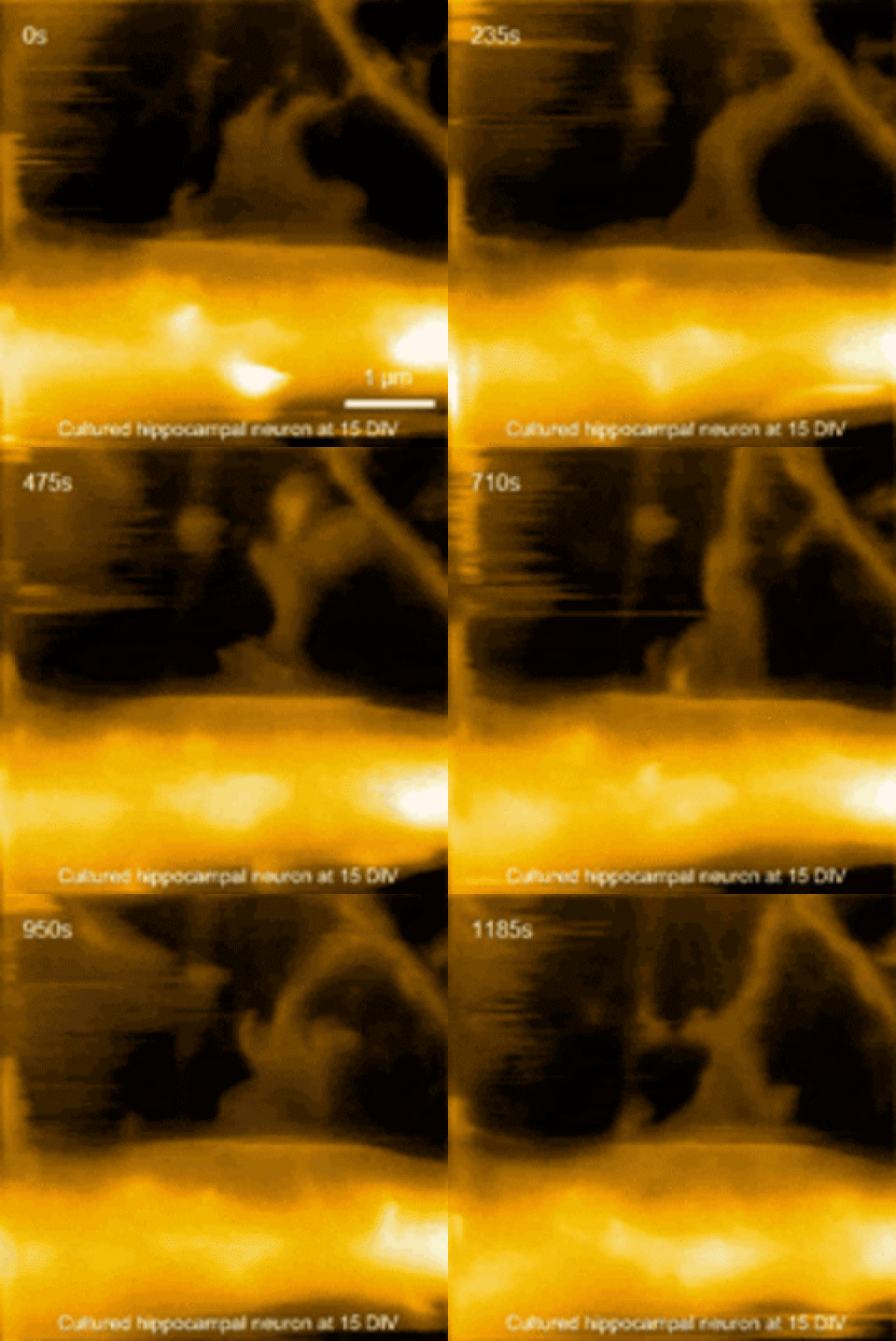
ezgif-3341908941.gifThis is footage of a neuron taken using atomic force microscopy, Allowing for imaging of nanoscale dynamics of neurons.

As we looked at this footage, we began to think.. What if neurons are engines of future freedom? Constantly searching to maximise its future freedom of action?

If we take the perspective of each neuron having it’s own agency, then we could take the perspective that each neuron is in fact, an entity that strives to maximise entropy, and as such, maximise its future freedom of action.

This intuitively seemed to make sense on a very deep level. But that still left it open to asking the question, how does firing, maximise future freedom of action?

We knew that future freedom of action is not simply defined by movement in space, but is really defined by the amount of options one has available. As shown with the inverted pendulum experiment in the paper ‘Causal Entropic Forces’. The pole took the inverted position, because in that position, it could maximise its options. This is because in the inverted position, the pendulum now has more potential energy, and can be dropped in any direction to carry that energy to another position. Whereas if the pendulum remained upside down, it would take more effort and time to move it to any other position.

With this we knew it was at least possible for firing to be represented as a form of maximising freedom. But, this still did not fully answer how it maximised freedom.

We also knew that there was a clear correlation between neural activity, and entropy maximisation. Not only because it intuitively makes sense, i.e neurons burning more energy by firing. But also because there has been research on the thermodynamics of learning in neurons, and they found a clear correlation between the rate at which neurons learn, and the amount of heat and entropy they produce. You can read about that here: https://m.phys.org/news/2017-02-thermodynamics.html

All of this was a clear sign that we were on the right track, but it still didn’t really connect the dots. There was something missing, we could feel it.
Then we took another look at Hebbian theory.

"Let us assume that the persistence or repetition of a reverberatory activity (or "trace") tends to induce lasting cellular changes that add to its stability.[…] When an axon of cell A is near enough to excite a cell B and repeatedly or persistently takes part in firing it, some growth process or metabolic change takes place in one or both cells such that A's efficiency, as one of the cells firing B, is increased.”

The theory is often summarized as “Cells that fire together, wire together." However, this summary should not be taken literally. Hebb emphasized that cell A needs to "take part in firing" cell B, and such causality can only occur if cell A fires just before, not at the same time as, cell B.

The thought then came to mind.

What if neurons, are actually trying to control other neurons?

Neurons are trying to maximise entropy by not only making themselves fire and burn energy, but trying their best to make other cells around them fire and as such burn more energy.
As stated in Hebbian theory, causality is very important in the process of learning. The cell will not strengthen its connection just because another cell happened to fire at the same time as it did. No, it will only strengthen its connection, if it feels as if it had influence over the cell.

It needs to "take part" in firing cell B. Because if it sees it has influence over cell B, it will strengthen its connection, to strengthen its influence. But cell A is constantly searching for more influence. So if it finds that it can have more influence over another cell, it will gravitate more so towards that cell. Or if it suddenly finds that it can no longer influence cell B's firing as much as it once did before, then it will begin to move and search elsewhere.

We felt, that this was it, right here.

We were looking for the missing connection between entropy maximisation, and the cells working together, and we think we found it.

What this would mean about firing, is that firing isn't really a method of processing information. But rather, it's a method, a tool that cells use, to influence other cells. And that really the processing of information, is an emergent property from this activity.

..it’s a paradigm shift.

Ha, our crappy functions in artificial neural networks, are just approximating the entropy maximisation process in a really crap way, but even so it kinda works (incredibly).

Hebbian theory emphasizes causality in the connection process, or 'seeking' process, as we think it’s better to call it.

This would mean that there could be a neuron next to another neuron, that has a lot of activity, in how frequent it fires, and in how strong it fires. Either due to how many neurons are connected to it, or due to sensory stimuli. But even though that neuron has a lot of activity, it may decide not to reach out to it, because it may see it does not cause it fire, as strong as another.

This makes sense from the perspective of entropy maximisation because the neuron will seek and favor sources it has more influence over, even if it does cause the neuron to fire, and as such, dissipate energy. How big of a firing did it cause? How much energy did it cause it to dissipate? This is deeply important, because in tightly packed groups where every neuron is constantly firing, some spikes strong, some spikes weak. A neuron can choose to loosen its grip on one neuron its firing, to strengthen its grip on another. The activity on both neurons it’s choosing between may be just as frequent, but one neuron may fire much stronger than the other. Due to other neurons around it, just so happening to fire in perfect sequence with its firing. So the neuron will seek and sort of grip onto that one more, because it sees it's actually causing it to dissipate more energy than the other.

They opt-in to participate, and to selectively choose collaborators. This may be mediated by the glial cells (tentatively some research suggests that glial cells mediate connections).

Imagine one passes energy along the chain. One isn't just influencing the next neuron in the chain necessarily, one might influence others further along.

if the pattern of firing travelling along the chain is replicated by the next one, then one can change the pattern of their firing and affect multiple others in the chain ahead to different degrees.

You may also be noticing that our description of the processes of neurons is much different than how they are normally described. As shown in our use of words such as ‘seeking’ and ‘gripping’.

This is because we think much of the vocabulary we currently use to describe the activity of neurons, may actually be working against us in our effort to understand their functions, causing us to look at the problem through the wrong lens.

With this theory we have developed, we predicted that it would likely be possible to replicate the functions of neurons with something else entirely. Anything that can be used as a tool to influence other agents in a system.

Well, much to our excitement, we later found strong evidence that our prediction was indeed correct.

It turns out, that bacteria can actually communicate electrically.

A very recent study discovered that bacteria communicate electrically, by using biofilms to propagate their electrical signals. The head researcher of this project, Gürol Süel, explained that “bacteria within biofilms can exert long-range and dynamic control over the behaviour of distant cells that are not part of their communities,"


This, is a perfect example of collective agency.

Small pores called ion channels allow electrically charged molecules to travel in and out of the cells. In this way potassium ions can ripple through the whole biofilm.

The bacteria, instead of sending the signals out in a directed channel like neurons, they send them out as a mass impulse.

We began to realize, that neurons don't really matter, do they? Could just as easily be slime. It's just the entropic principles that matter.
Our world is an ocean of intelligence, and we never knew.
It was under our noses. Of course plants and germs have agency. But... We just couldn't grok that somehow, until we had a model to describe it.
We just love theories that are so beautifully simple, yet explain so much complex phenomena we see in the world.
We also find it fascinating to see such a deep connection between entropy, and processing information, as shown when Shannon discovered the concept of information entropy. And to now see a deep connection between entropy and intelligence itself.

Seeing as we are true mavens for curious data points, we began connecting the dots to a variety of other fields as well. Lead by the intuition that it would be possible to create far better AI using these concepts.

One low hanging fruit we saw, was to apply the method of entropy maximisation to NEAT to aid in the mutation and evolution process. We are currently working with the mathematics department at Oxford on this specific opportunity.

But we also have a much bigger vision than this. Combining cellular automata, entropy maximisation, and possibly even quantum walks to speed up calculation times. We think it’s possible to create true AGI.

We felt that there was also a link to entropy maximisation and cellular automata too somehow.

At the end of the paper, it stated that they are still trying to figure out how to compute entropies of cellular automata.

They also said this.
"Understanding and being able to compute entropies for cellular automata
may lead to the development of CA that can model thermodynamic systems.
It is thought that CA may be the key to understanding a large number of
subjects on a deeper level."
Hm, maybe looking at the problem from the perspective of entropy maximisation would allow for that understanding?
Gas_velocity.gif
As stated, being able to understand and computing the entropies of cellular automata, may lead to the development of CA that can model thermodynamic systems. Biology, and the brain, are thermodynamic systems.

As such It’s possible that with CA, we could make a complex adaptive system, with emergent intelligent behavior. Then we could give this, newly formed complex adaptive system.. input from the real world, and it could begin to adapt and form a model of that input. It could learn.

Our theory shows, that it probably doesn’t matter that we replicate exactly how neurons work or even send out signals the same way they do. It’s the entropic principles that matter. It’s possible, that we could let a system such as CA evolve its own methods.

giphy.gif
In essence, it may be possible to make a brain like system out of cellular automata, and as such, achieve AGI.

Actually, if neurons don't matter, then there's no reason for us to assume that the brain is the epitome of an intelligent complex adaptive system. Evolution does not reach perfection, it simply evolves as far as its environmental pressures push it towards.

As such, it may even be possible to evolve a better system design than the brain, using CA.

The key to doing this we think, would be to make CA, where each entity is a causal entropy maximisation agent. Calculating the entropy of a system is inherently a stochastic process, as such we realized the states of the entities would have to be determined by a probability distribution. Luckily we found, and much to our excitement, that there is indeed a such thing as stochastic cellular automata: https://www.wikiwand.com/en/Stochastic_cellular_automaton

giphy.gif“From the spatial interaction between the entities, despite the simplicity of the updating rules, complex behaviour may emerge like self-organization.” We love wikipedia..

SCA also has a deep connection with the cellular potts model, which is a form of CA which has been used to model biological processes such as the growth of blood vessels.

Another idea that came to mind, was a potential way to calculate the entropy production of these systems.


Our idea, is that one could use the computer itself to measure the entropy production of these systems. We figured that computer processes, should have a real physical entropic effect on the computer, and you could measure that.


Computers produce heat, and consume electric energy while doing so. The processes that happen on the computer, are not separate from the computer itself. The computer and the processes happening on the computer, are actually consuming energy and as such should produce a real measurable amount of entropy in the universe. As shown in information theory, the processing of information is not separate from the physical system you use to process that information, and such to process information requires one to do 'work' on a system, and as shown in physics, any work requires the expenditure of energy, and increases the total entropy of the universe as a result.

We believe this is a truly novel idea, due to our novel viewpoint on the problem. Actually, we would like to give some credit to a famous writer and speaker, his name is Kevin Kelly and he has definitely influenced our way thinking. Kevin Kelly actually looks at technology as the 7th kingdom of life.

We are also currently working with the mathematics department at Oxford to look into this as a potential way to calculate entropies of and apply entropy maximisation to NN's and CA.

It should be possible to build a reservoir computer made out of CA, where the reservoir itself, is literally the energy being fed into the computer.

Recent research into reservoir computers has shown that they are likely deeply related to entropic processes and even the brain.

As shown in this article: https://www.quantamagazine.org/a-brain-built-from-atomic-switches-can-learn-20170920/

Engineers at the California NanoSystem Institute, recently built a mesh like computer that organized itself out of random chemical and electrical processes.

Essentially they found out that a material will organize into a wire like mesh, given an electrical charge. It's self organization is not only reminiscent of the brain, but it can perform simple learning and logic operations and it can clean the unwanted noise from received signals.

Another very interesting thing is the self-assembling wire networks experiment the Center For Complex Systems Research conducted.

You can view a version of this experiment here: https://cosmosmagazine.com/technology/watch-ball-bearings-organise-themselves-into-complex-tree-like-structures
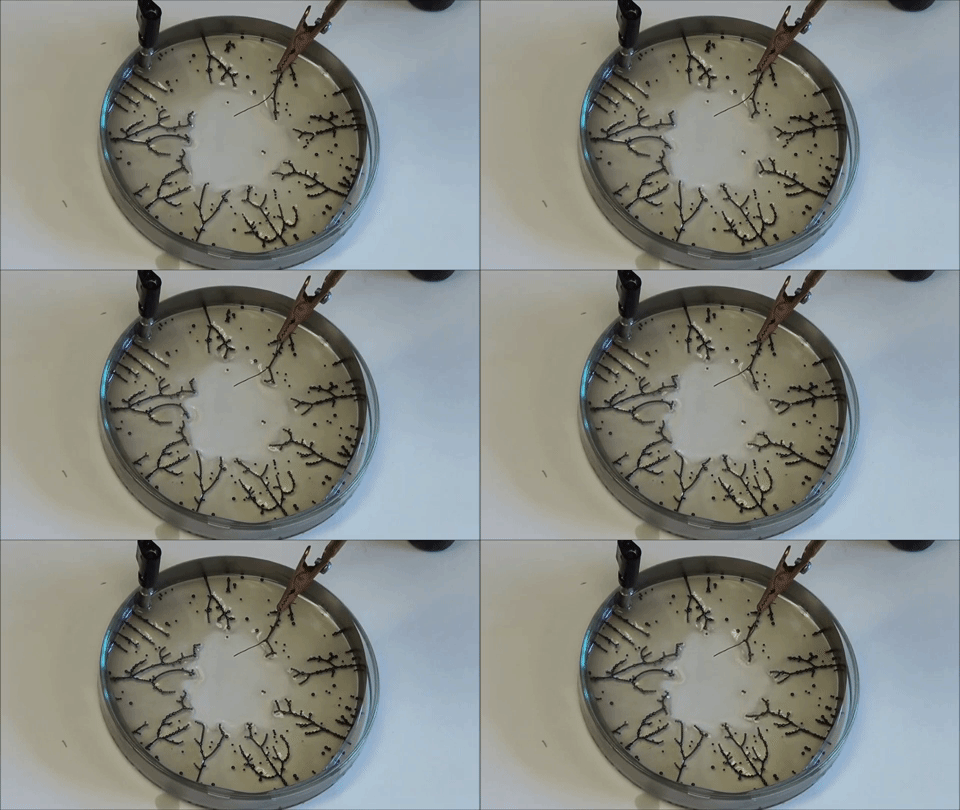
giphy.gifGiven an electrical charge, ball bearings will self organize into tree like structures and can even perform simple computations.

Researchers Joy Chao and Alfred Hübler from CCSR note that this research will give us clues as to how the neural connections of the brain work and ways to control connections.

Researchers Marshall Kuypers and Alfred Hübler also from CCSR, note in another experiment they call the thermodynamics of thought experiment.

“That these types of particle networks “remember” which electrodes were charged--in effect, a kind of learning. Thus, these systems are hardware implementations of a neural net.”

The self organization in these systems is not only reminiscent of the brain, but they’re also able to learn and perform at least simple computations. Its only further evidence that the brain is likely a structure that emerged from entropic processes and that it’s intelligence is an emergent property of these microscopic ground truths.

Lastly, we thought of a potential way to enhance causal path entropy discovery. Path sampling is done through Monte Carlo methods such as a random walk. Well It turns out there exists a such as thing as a quantum walk, which is much more efficient than a normal ‘classical’ random walk. it also turns out bacteria have likely evolved their own method of doing these quantum walks, during photosynthesis.

Seth Lloyd who does quantum life research at MIT goes in depth about this process.

Quantum Life (very good video, highly recommend watching it): https://youtu.be/wcXSpXyZVuY

Recently, researchers also managed to build and perform quantum walks on a two qubit photonics quantum processor. They also found a link between continuous-time quantum walks and computational complexity theory and it indicates a family of tasks that could ultimately demonstrate quantum supremacy over classical computers.

Efficient Quantum Walk On A Quantum Processor: https://www.nature.com/articles/ncomms11511

So with a quantum processor capable of doing quantum walks, when one needs to do path sampling. Instead of using a classical processor to do those computations, one could send those requests to an external quantum processor. Which would do the necessary computations, the main processor would retrieve the results, and then use them in Its calculation of the state change of the entities within SCA.

To accomplish something like this is going to take a massive effort. It will require experts from completely different domains all working and more importantly, thinking together to achieve this. This is truly a transdisciplinary project.

We naturally thought about what research group would likely be best suited to take on this challenge.

We think that the collective computation group C4 at the Sante Fe Institute, would be perfect for attacking a problem like this. As they not only have the right minds along with the transdisciplinary nature of the Sante Fe Institute, which pulls experts out of their fields, and forces to them collaborate and think together. But probably best of all, C4 seems to have the right mindset when it comes to attacking big interdisciplinary problems.

Here's a quote that I love from the director of the C4 group at Sante Fe.

“We have this argument at the Santa Fe Institute a lot. Some people will say, 'Well, at the end of the day it’s all math.' And I just don’t believe that. I believe that science sits at the intersection of these three things — the data, the discussions and the math. It is that triangulation — that’s what science is. And true understanding, if there is such a thing, comes only when we can do the translation between these three ways of representing the world.” - Jessica C. Flack C4 Director
Wednesday, March 15, 2017

Entropic AI Research

A.D. Wissner-Gross a Physicist at MIT and C.E. Freer a mathematician who taught pure mathematics at MIT published in 2013 a paper about Causal Entropic Forces.

In the paper it talked about a potential deep connection between intelligence and entropy maximization.

Alex's website: http://www.alexwg.org/

Causal Entropic Forces: http://www.alexwg.org/publications/PhysRevLett_110-168702.pdf

I first heard about Alex's work 3 years ago in his TED talk "Equation For Intelligence". After watching that TED talk i was captivated by the idea that intelligence could actually be a real physical force in the universe. I was even more captivated by the idea that Alex had created an AI that was capable of making "Intelligent" decisions, such as balancing a pole on a cart, using a tool to retrieve an object stuck in a confined space, solving a cooperation puzzle, and even executing a buy low sell high strategy on a simulated stock. The AI did all of these things, Yet they had never given it a goal.


Humans, animals, insects, and even plants can create their own goals. Yet virtually every AI we have created has required someone to specifically specify it's goal. As such i think Alex's work is an important step and direction in AI development.

After watching that TED talk i started doing research and immediately began connecting these concepts to some of my philosophical ideas as shown in my post Objective Rationality. A few years later i started forming a new idea/theory around AI connecting these ideas of intelligence with Jeremy England's (a biophysicist at MIT) ideas regarding the origin of life and its connection with entropy, and Kevin Kelly's (a thought leader in technology) idea's regarding technology and entropy.

Recently I went to Exosphere to learn python programming, and while i was there i was able to do more research into this new field.

I ended up getting in contact with another mathematician and physicist in Spain who is doing research into this field as well. His name is Sergio Hernandez and he has a blog called entropicai, and with a bit of his help and help from my teacher Roberto Panai who is getting his phd in pure mathematics. I was able to make an AI based off of the principles of maximizing future freedom of action as stated in Alex's research paper.

The AI i made is pretty simple, it uses monte carlo to search "path space" looking for and choosing paths with the most amount of "freedom". More freedom is defined as a path having more "steps".

These were the first "feelers" i made, they moved in only a diagonal direction, and randomly changed between a 30 degree and 60 degree angle.

It was limited in "sight" due to only being able to search path space in a 45 degree angle.

In order to maximize it's ability to search path space i made it able to search in more directions by increasing its search area to 360 degrees and even change it's direction allowing it turn and travel in circles.

I then started to make obstacle logic so that when one of the paths enters a certain area, it stops generating steps. I also made a box to contain all the paths so they don't go off forever into the ether, saving computing power.

Ending up with this rather beautiful image.

As you can see whenever the paths reach either an obstacle or the square boundaries, it stops generating steps.

Now that i had made a way to search through path space, the next step was to make the algorithm that chooses the path with the most futures.

The algorithm essentially simulates the future by simulating a bunch of random paths from its starting position, it then chooses the path that managed to generate the most steps, then the algorithm takes an X number of steps along that chosen path, then it loops on it, simulating another set of random paths from its new position,

Here's a visual example of it simulating hundreds of futures from its initial starting position which is inside a ring with a small opening.


Here's a visual example of it simulating futures from its new starting position which is now outside the ring.

The algorithm as a result is able to find its way out of any maze no matter how difficult, given enough computing power.

Even though it can find it's way out of any maze, it is of course just a simple algorithm brute forcing a solution. Also in this situation i am giving my algorithm a goal by deciding what i mean by "most futures". Where as in the research paper, most futures is determined by something much deeper, far more general, and more complex.  Also the only thing my algorithm can really do is solve maze problems, it can't do much else. Where as the algorithm in the research paper can balance a pole on a cart, or use a tool to retrieve a trapped object, all without redefining "most futures".

There is however one very interesting thing that my algorithm does.

Without changing the algorithm, the very same algorithm that can escape mazes, also does something very interesting.

If it has no maze to solve, it will always gradually move to the center of its container and stay there.
This is interesting because not only did i not tell it do this, nor did i expect this to happen when first starting this project. But perhaps more importantly, it's interesting because it correlates very well with the first experiment Alex does as shown in his research paper, which is the particle in the box experiment. 
As said in the research paper. "As a first example of causal entropic forcing applied to a mechanical system, we considered a particle in a twodimensional box [13]. We found that applying forcing to both of the particle’s momentum degrees of freedom had the effect of pushing the particle toward the center of the box, as shown in Fig. 2(a)"
The reason my algorithm gradually moves to the center of the box, is the same reason why the algorithm in the research paper also moves the particle towards the center of the box. That reason is the fact that by moving towards the center, it maximizes its future freedom of action.

I unknowingly was able to replicate Alex's particle in the box experiment by making an algorithm that can solve any maze using the principle of trying to maximize future freedom.

I feel as if this hints towards some deeper truths regarding this idea of maximizing future freedom.

Even though the math behind the causal entropic forcing as shown in the research paper may be too difficult to apply to real world problems. It could be that simply focusing on trying to create better and better algorithms that maximize future freedom of action. Could naturally result in the emergence of more general artificial intelligent systems that increasingly do a wide variety of unexpected things. 

I think Deep Q Neural Networks share similarities with this concept of maximizing future freedom of options.


Saturday, August 29, 2015

An idea that may help to better understand the brain

I want to understand how the brain works. I learned that the two important aspects about the brain are its topography, and its pattern of neural activity.

If you fully understood how the brain molds itself from stimuli. You would be able to predict the structure of neural connections based off of certain stimuli. So far as i know, no one knows how to do that, no one truly understands how the brain works.

While trying to understand it myself, i tried to imagine groups of neurons and what structure they may make based off of the information that enters them. I could not do it, so i tried thinking of something else in the world that does the same thing. As in, changes its structure based off of the stimuli.

One idea i thought of was sand on a vibrating metal plate. Based off of the vibrations of the metal plate, the sand will change structure to match that specific stimuli.

If you fully understood how the sand changed in structure based off of the vibrations of the metal plate. Then i could give you a frequency that you have never heard, that would produce a structure that you have never seen, and you would be able to predict what it would look like.

I thought that if you could fully understand exactly how the sound causes the sand to form these structure's. You could apply that same understanding, and possibly more importantly how you achieved that same understanding, to understanding the brain.

Unfortunately i also do not understand how these structures are formed based off of these vibrations.
If anyone does, would anyone mind explaining it to me? Remember you only understand, if you can predict a given structure that you have never encountered.

I think another interesting thing to note, is how similar these patterns are to electron orbitals.


Another thing that has been in my mind for quite some time, was the idea that neural activity looks very similar to the chaotic movement of a massive flock of birds flying in the sky. Even though this idea may not hold much merit, i still feel the need to share it with others. An interesting thing about how birds are able to coordinate themselves into these massive organizations and move as if they were a single organism. Is the fact that these seemingly complex flock formations derive from very simple rules. That each bird simply follows the one in front of itself. I think its interesting to almost think of each bird as a single processor. I think its also interesting that formations that at the core derive from neural activity, begin to resemble said neural activity.


This is the neural activity of a Zebra fish, right now it may be difficult to see its resemblance to the movement of a flock of birds. But i think it would be important to remember that a zebra fish lacks a neocortex. So i think it would be interesting to see neural activity from a neocortex imaged liked this, and i think it would further resemble the movement of the birds as well.


Sunday, May 24, 2015

Google's Methods Of Resource Acquisition Are Unique And Powerful

Google is special. They are unlike most corporations, in the fact that the methods they use to acquire resources depend not on competition, but on something else entirely.

Corporations share many characteristics with organisms, and if properly observed, can even be classified as organisms themselves. And as you may have learned from biology, competition is not the only interaction that occurs between organisms.

The type of interaction that Google uses, is akin to Symbiosis, which is much more difficult to find, and take advantage of, not only in our man-made environments, but in natural ones as well.

This type of interaction can be seen in their main source of income, their search engine.

In the symbiotic interaction between bees and flowers, bees come and absorb the nectar from the flowers, In the process, the bees get food, the flowers get more genetic diversity. Yes both benefit, but that's not the important part.

In this interaction, not only do both benefit, but more importantly, both begin to experience rapid growth due to the feedback loop created by their interaction with each other.

The more bees, the more flowers. The more flowers, the more bees.

The same applies to Google's search engine. The more people that use their search engine, the more ad revenue Google receives. The more ad revenue they receive, the better their search engine becomes. The better it becomes, the more people use their search engine.

Google's search engine has grown to become the most used search engine. You could say that they hold, a monopoly over search.

But the interesting thing here, is that their monopoly over search, is not detrimental to its consumers, but in fact, very beneficial.

Not only due to the fact that we get better search because of it, but because of the other highly beneficial incentives it provides.

For example Google has much to gain from the internet being completely free, and completely ubiquitous.

The more people that use the internet, the more people that use their search engine, the more ad revenue they receive. Which last time i checked, constitutes over 90% of their profits.

They are the only ones that have much to gain from it being completely free, rather than profiting off of it, while having the resources to make it so, and they are on the path to making it such. But the amazing thing about this, is that they are not doing this because they are somehow altruistic (though they may be) but because they have much to gain from it.

It is this Symbiotic relationship that is built on rational objectivity that guarantees beneficial outcomes.

There are still over 4 billion people that do not have internet. Imagine the economic effects of suddenly bringing all 4 billion people online. (You can view the internet stats here: http://www.internetlivestats.com/internet-users/ It actually has a really cool counter that actively shows the rising population of internet users)

Making the internet completely free and completely ubiquitous, would be a major achievement, and with rippling beneficial effects. Here are some of the ways they are on the path making the internet completely free.

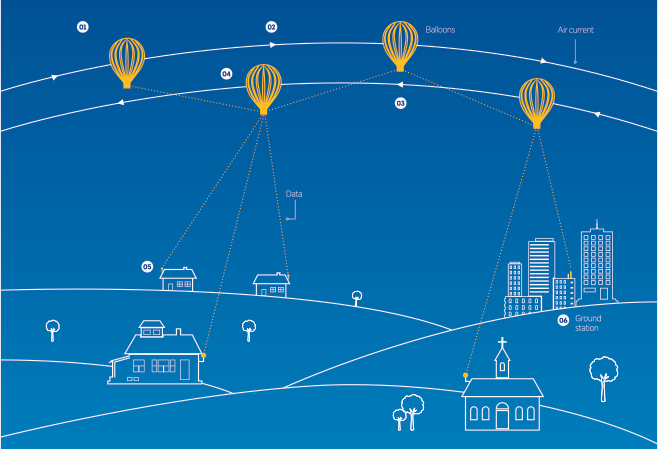
Project Loon: With project Loon they plan to put helium balloons in the sky, and use them as atmospheric satellites. With the direct goal of providing free internet for all.
http://www.google.com/loon/.


Acquisition of Titan Aerospace: Google bought Titan Aerospace, a drone company that is working on solar powered drones. You can see the obvious potential of this technology in their endeavor to provide free internet for all.  http://www.techspot.com/news/56387-google-acquisition-of-drone-maker-titan-aerospace-will-lift-project-loon-to-new-heights.html


Google fiber: Google has begun to lay out fiber optic cords in a number of different cities, one of them is mine (Austin, TX). This service does of course cost money laying down the infrastructure is simply to expensive. But i do not think profit is the main goal here. I think the goal here, is to disrupt the strangle that is the detrimental monopoly that ISPs such as Comcast, Timewarner, and AT&T have on us. By introducing incredibly fast internet speeds, around 1000 Mbps for a very low price. Around the same price that people pay these other sleazy ISPs just for 5-10 Mbps. (Horrible, i know, we should be out in the streets with torches and pitchforks)
https://fiber.google.com/about/

But making the internet free, and completely ubiquitous, is just one of their goals, or should i say, incentives.

Out of all the other corporations, Google is the only one i have seen to put so much money and effort towards technological advancement, from what seems to be purely for the sake of it.

If you do not believe me, here are some pretty amazing examples. (Seriously click on every link if you have not heard of them already)

Makani; http://www.google.com/makani/#overview 


Boston Dynamics: http://www.bostondynamics.com/


Clean Energy: https://www.google.com/green/energy/investments/


Google Car: https://www.youtube.com/watch?v=CqSDWoAhvLU


And these are just a few, the list goes on.

Again i am not arguing that they are altruistic, but rather, that they have much to gain from all of this. Where as other corporations only focus on money, and for good reason, because currency is a powerful resource, because you can convert it into just about anything else. It seems like Google is interested in much more than just money. Its like they understand that all of our businesses today are built on technology, technology that at one time did not exist. As such they seem to treat potential technology, technology that does not exist, but has the potential to exist, as just as much a resource as anything else.

But also where other businesses simply wish to grow and profit off of their products. Google seems to want to use the resources they have acquired, to make an impact, to change the world. Now whether for better, or for worse, does not matter. What matters, is that this makes them powerful.

Where other businesses have small limited goals, where they stagnate and cling to old tech and methods, which has proven to kill businesses time and time again.

Google doesn't just not stagnate, they create. They do not play catch up, they are the ones forcing others to catch up. Because of this, Google will be around for a very long time, and also, has the potential to become the most powerful corporation in the world.

Monday, April 20, 2015

Minecraft Social Experiment

About a few months back, i had one of the most fun, interesting, and socially enlightening Minecraft experiences to date.

I feel as if much was learned about human nature, from this one session. Though when me and some of my friends began this match, we had no intention of getting anything of the sort out it.

So ill start from the beginning.

I invited 5 people, some of them i knew personally, some of them were simply friends of friends. Out of the 5 people there were 4 males and 1 female. This one female would significantly change how the game was played out, simply due to her being female, and us being male. You'll see why later. So lately i had been wanting more of a challenge out of Minecraft, such as a harder time gathering food and resources, and surviving overall. So before i loaded the world, i came up with a single new rule. That rule, was that you only get one life. No matter how you die, if you die, you will be kicked from the session and will no longer be allowed to play. That was the only rule, any and all other actions, were allowed.

I did not realize just how much this would change things.

So as soon the world loaded, and we all spawned in. We looked around at our surroundings, and we saw relatively flat plains, with a few trees dotted about in the distance. We then did exactly as anyone who has played Minecraft would expect. We all spread out, but agreed to all meet back at a specific location, and began to gather resources. We all understood that starving didn't just mean despawn then respawn, but rather, permanent death. As a result, we were all careful not to travel to far away from each other, lest we get stuck alone at night, which would mean almost certain death.

As the sun began to fall, we all anxiously hurried back to each other, and due to the lack of resources, had to make our temporary home a lowly hole dug out in the side of a small cliff.

While all huddled in this small area, we realized some of us, had little to no food due to the scarcity of life in the area. When one person said they were hungry and needed to eat before the end of the night, We all got quiet in the voice chat. We all felt it, and it was likely all our first time feeling..it. Normally you can gladly share your food with others because there is not much risk in doing so. But now. Sharing your food with someone else, could mean your death. When the person asked again, someone eventually broke the silence with a small offering of their food, then another person offered a small amount of theirs as well.

I had plenty...but offered none. I also kept the information as to just how much food i had, to myself. I believe this was the first time i noticed something different about myself, and about the others compared to all my past sessions.

The night felt long. To try to sleep through it, my good friend Devon tried to make beds, but only had enough resources for one.

I sat in a corner and fashioned myself a stone sword, little did i know how much of an effect this stone sword would have on me, and everyone else.

During all this time we also made the hole we lived in a bit bigger.

While Devon was mingling with the others, i saw his bed in the corner. A thought ran through my head..i wanted the bed. While Devon wasn't looking, i decided to take it for myself, but only as a joke.

When Devon came around and noticed that his bed was gone, he asked who took it. I said "I did".
He asked for me to give it back. Still jokingly, i said no. He then pulled out his, Wooden, sword, and threatened me with it. But because i was the only one that gathered enough stone just before the night came, i pulled out my stone sword.

In that instant we both realized something, that i had the power. Normally whether you got into a fight or not, or had the weaker weapon or not. It didn't really matter, because if you died, you'd just respawn.

But this was not the case. Now, you could threaten someone with death, and it would actually mean something.

We stared at each other for a moment. But Devon, understanding the severity of the situation, eventually backed down, realizing that his life, was not worth a bed.

That confrontation between me and him, stirred something in me.

From that point on, instead of asking for things, i began to give commands.

Ordering people to give me more food, to give me their stone, and other resources. And that if i ever found them holding out on me, they would be punished. Devon and another guy were always reluctant to do so, but had no choice, However, to my surprise, one guy gladly obeyed my orders.

I elected myself as leader of the group.

When morning finally came, i knew we needed more food, so i decided that we should travel.

I chose a direction, and the guy that gladly followed my orders, without hesitation, followed my lead. Which then caused the female to follow, and Devon and the other resistor, not wanting to be left behind, followed as well.

After much walking we saw a village in the distance.

At that moment i began running towards it, killing any villager i came across, yelling and telling the others to do the same. I commanded them to pillage the village, kill all the men and children, and rape the women!

After all the villagers were dead, i claimed the village and its farms as my own, all Mine and only Mine.

After a while i saw everyone harvesting the wheat from the farms, My wheat.

I gave the order that these farms are my farms and that you must give me a portion of all the bread you make.

I was really beginning to push Devon to his limit.

This other person however still oddly, gladly followed my orders. I decided to make use of him, i commanded him to go mining and get me enough iron for a set of iron armor.

Devon, his fellow resistor, and the female were picking out their homes. I saw that Devon chose to make the biggest house, his house. I did not agree with this decision.

When my follower came back with a piece of armor, i decided to reward him.

I told Devon to get out of the house, and that the house will be my followers home, as a reward for all his great deeds. I even gave my blind little follower a title. I called him, my Thane, and that he had earned the title for being such a great warrior, and for his service, to the king.

This was the last straw. Devon couldn't take my shit anymore, he grabbed his stuff, and left the village. His fellow resistor sharing the same sentiments, left with him. The only female of the group, decided to leave with Devon as well because she had known him longer.

 I would have stopped him and threatened him with death, but i knew even though i had slightly better weapons and armor. That it was risky to fight all three, even with my Thane at my side. Devon could have also fought for the village right there and now, but he also understood, the risk. So i let him leave.

But he and i understood that we would not be seeing the last of each other. That when he has gathered enough resources, he would make an attempt at my life.

Without saying it, we both knew there was an arms race going on, where ever he was, he was definitely trying to get stronger weapons and armor.

So i commanded my Thane to keep getting iron and make me a full set of iron armor.

later on through out the game, Devon and i, both knowing whats to come, decided to meet at a empty field. To make sure they did not try anything, i brought my Thane with me, and to make sure i didn't try anything he brought the two other people that left with him as well.

When we met at the field, we stayed a good distance apart from each other, making sure no one got too close. We stared at each other and discussed somethings. I forget the exact things we discussed, but what i did take from them this meeting, was that there soon would be war.

As we were leaving, i saw the female. A thought ran through my head..i want her. So i stopped and told her to hold on. Devon concerned for her safety stayed as well.

I asked her, why not come with me?

I am stronger, wealthier, better, a king of a whole village.

I said these exact words, "if you stay with him, you will continue to be nothing more than some whore living underground in the dirt."

And before she could get offended by my words, i told her. "But if you come with me, you will be a great princess, you will have an entire village with farms to yourself. You will live at the top of the tower."

Reluctantly, she agreed to come with me.

Even though this was all just a game, i know this hurt Devon's Male Ego in someway.

But at least for a moment, it seemed as if we all forgot that this was all just a game.

smugly, i asked Devon how he felt about me taking his woman. He of course tried to act it off as if it didn't phase him.

We parted ways for the last time.

When we returned to the village, as promised, i guided my new princess to her home, and had her climb to the top of the tower, At the top, laid her bed, the same bed, that i took from Devon at the beginning of all this. Not only was the tower a nice sight, but we could also see for miles, allowing us to see if Devon and his fellow resistor were coming to attack the village in the night.

Knowing that Devon is a better miner and resource gatherer than i am, i decided to attempt a preemptive strike, before he could attain better weapons and armor.

At first light, me and my thane left to attack Devon, telling the princess to wait for our return.

We carefully moved to where Devon and his fellow resistor where holed up. They were underground, just below us.

When i broke the block under my feet, It all happened so fast. I dropped down ready to swing at anyone i saw, hoping that the element of surprise would give us the advantage.

...I slipped on blood (a figure of speech that my friend Devon still uses today).

When i dropped, the ground below me was too high, so my head was still poking out at the top. I could barely see what was going on below me. Surprised that i was there, they reacted fast, grabbed their weapons and made their way toward me. I saw them coming and i attempted to select a block to place below me so i could get out, but i know i couldn't do it quick enough. So as a last ditch effort, i swung blindly. Helpless as they stabbed me to death.

The End.

It was interesting to see what we would all do in a simulated survival situation.
It was somewhat similar to the book, Lord of the flies, and the book Grendel.

Sunday, February 15, 2015

The FDA is a bottleneck on technological advancement

tinycamera
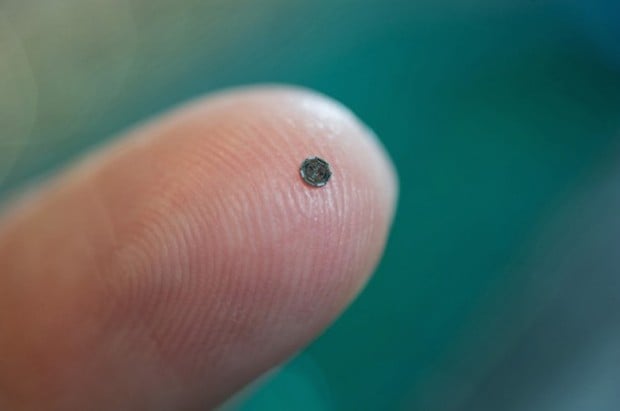
This chip right here, could save lives in the emergency room. But we still have to wait months-years, for it to be approved by the FDA.


Another very recent example is the recent petition made by Nick Grillo, a person who was been diagnosed with ALS.


In this petition which you can view and i urge you to sign here he mentions that there is a drug called GM6. This drug has the potential to extend his and other peoples lives who have been diagnosed with this debilitating disease. It is not a cure, but it could at least extend their lives long enough for a cure to be found.


Yet the drug is still awaiting time consuming approval, it will likely take 3 years before patients will have access to this drug. Yet most people with ALS are only given 2-5 years to live. This means that most people currently living with ALS wont be around to see it reach the market.


This is unacceptable, and a clear example where the FDA does absolutely more harm than good, as well many others.


The FDA is one of many government entities acting as a bottleneck on technological progress. Soon technology will advance faster than they can keep up.


The FDA needs to be done away with if we wish to experience the beneficial effects of technology as soon as they are made.


This is not 1920, we do not need some vague entity making decisions anymore. We have advanced telecommunications technology. We can research the information ourselves, and can make knowledgeable decisions for ourselves.


All drugs and procedures have pros and cons, and it should be up to you to weigh those pros and cons.


The FDA, or atleast their power, needs to be removed. 


This is only one example of many where technological advancement is stifled by government intervention.


The Google car is another example, held back not by the FDA, but nonetheless other government entities.


Even though the car drives better than any human, can see in all directions, all at the same time. Does not get drunk, or distracted, it still faces inevitable, but time consuming approval.


Ray Kurzweil, a truly amazing individual who is director of engineering at Google. Has made many predictions about the future of technology, the far majority of them correct. The problem is, he predicted that we would have driverless cars on the road by 2009. He was wrong. But the interesting and rather worrying fact is that he was not wrong due to the lack of technology, but due to the inefficiency of government. Due to this his prediction was off by, I believe 4-5 years. If you've ever read his predictions, which you can read here. You would realize that 4-5 years, is a very long time.


He made another prediction that by 2019 computers will do most of the driving, and humans will be prohibited from driving on highways unassisted. From this perspective, i am sure that we all can agree, this prediction will be false as well. But again not due to technology, but the inefficiency of government.

For me and my fellow Transhumanist, i am sure this is very worrying, and that we can all agree that something, whatever it is, needs to be done.